
Emergency Air Duct Cleaning Near Me: What San Leandro Homeowners Should Do First
Most “duct emergencies” are not actually about the ducts. They’re about what got into them, what burned near them, or what started growing inside them. The first call you make depends on which of those three situations you’re in, and calling a duct cleaner before addressing the root cause can mean paying twice for the same problem. Here’s how to triage the situation before you pick up the phone. If you’d rather skip the reading and talk it through, call (855) 356-5880.
The Three Duct Emergencies San Leandro Actually Sees
In our experience serving San Leandro, the calls that come in labeled “emergency” fall into three buckets. Rodent activity in the ducts. Smoke or fire residue after a kitchen fire, a neighbor’s house fire, or a wildfire smoke event. And a sudden, unexplained odor that seems to be coming from the vents. Each one needs a different first step.
Here’s the decision tree:
- You see droppings, nesting material, or hear scratching in the vents: Call a pest control company first. Not a duct cleaner. If the entry point isn’t sealed, cleaning is temporary. We’ve had to tell homeowners this straight: we can clean it, but if the rodents are still getting in, you’ll be calling us again in six months. A reputable duct cleaner in San Leandro will tell you the same thing before taking your money.
- You had a kitchen fire, an electrical fire, or wildfire smoke rolled through: Call a duct cleaning company that understands smoke remediation protocols. The particulates are fine, sticky, and will keep off-gassing into your living space if not removed from the duct walls and replaced filters aren’t addressed. This is a real emergency in terms of air quality, and the right equipment matters.
- Sudden musty or sour odor from the vents with no visible cause: This could be mold, a dead rodent, or a disconnected duct pulling air from a crawlspace or attic. Shut the system down and call for an inspection. A camera scope will answer the question in under an hour.
First Hour After Finding Rodent Evidence in Your Vents
Finding mouse droppings around a supply register or hearing something move inside the ductwork is genuinely alarming. We get it. Panic mode says “clean it all right now.” The smart first hour looks different.
Step one: shut the HVAC system off at the thermostat and switch the fan from “auto” to “off.” You don’t want the blower pushing contaminated air through every room. Step two: take photos and notes of what you’re seeing and where. This documentation matters for your records and helps whichever contractor you call understand the scope. Step three: call a licensed pest control operator. They need to identify entry points, seal them, and address the population. Until that’s done, any cleaning is a band-aid on a bullet wound.
After pest control has done their work and the entry points are sealed, that’s when we come in. Air duct cleaning removes the droppings, nesting debris, and contaminated insulation or duct lining. The sequence matters. Pest control first, then duct cleaning, then a full-system sanitization if the contamination was heavy. Skip step one and the cycle repeats.
Wildfire Smoke and Your Ducts: Why Standard Cleaning Isn’t Enough
The East Bay deals with wildfire smoke on a recurring basis. San Leandro sits close enough to fire-prone zones that smoke events are a seasonal reality, not a one-off news story. What many homeowners don’t realize is that smoke doesn’t just pass through your home. It deposits fine particulate inside your ductwork, and that material sits there, getting redistributed every time the fan kicks on.
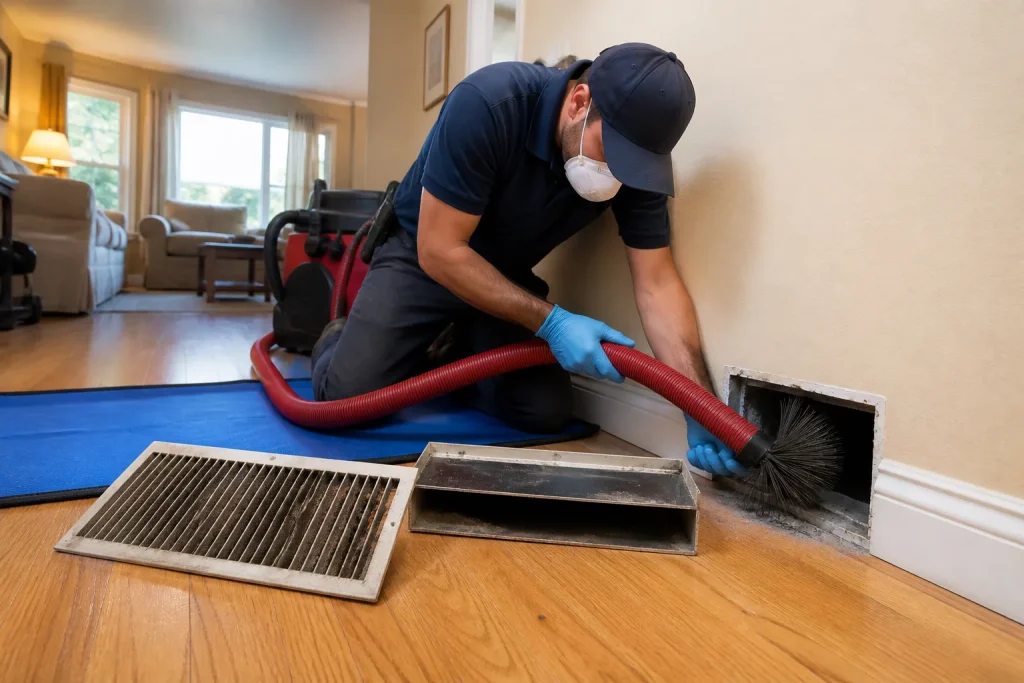
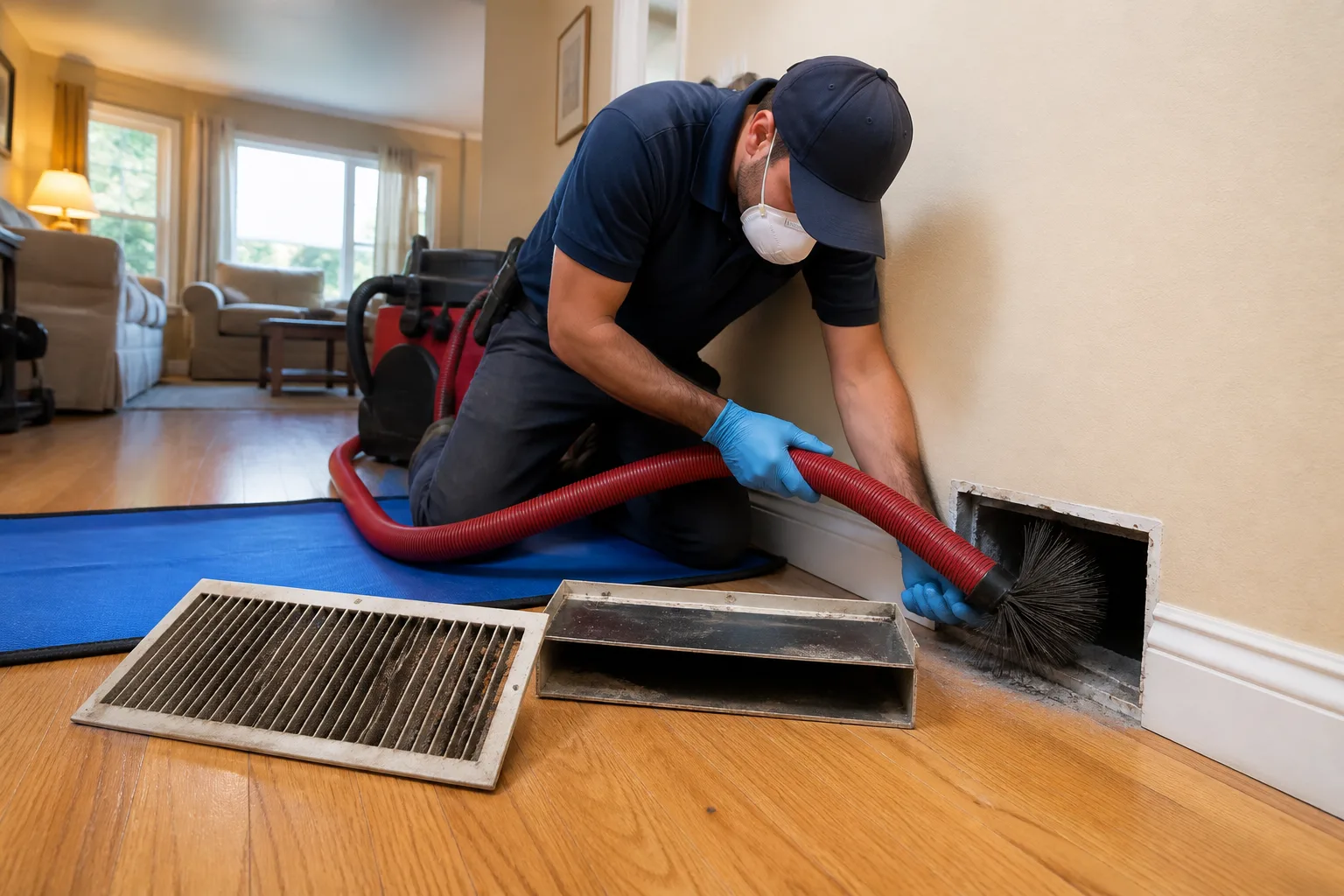
Here’s the part that separates a real duct cleaning company from a guy with a shop vac: smoke residue is not dust. It’s fine, oily, and it clings. Standard negative-pressure cleaning with simple agitation can miss it. The right approach after a smoke event involves HEPA-filtered negative air, aggressive mechanical agitation to break the particulate bond with the duct walls, and often an air-scrubbing pass. This is why we run equipment from Abatement Technologies and Nikro, not consumer-level vacuums. Those HEPA rigs and air scrubbers were built for exactly this kind of contamination. If a company quotes you a smoke-event cleaning without mentioning HEPA filtration, keep dialing.
Interim steps while you wait for service: keep the HVAC fan off, run a portable HEPA air purifier in the rooms you’re using most, and keep windows closed. If you have to run the system, set it to recirculate if that’s an option. And check your filter. It likely needs replacing already if you’ve been running the fan during a smoke event.
What “Emergency Duct Cleaning” Actually Means Operationally
Let’s be honest about what emergency service looks like in this trade. Most companies that advertise “24/7 emergency duct cleaning” are really offering a phone line that’s answered after hours and a service slot in the next day or two. There’s no crew sitting in a truck at midnight waiting for a duct call. The ducts themselves rarely require a 3am fix the way a burst pipe or a dead furnace in January does.
We answer 24/7. That’s real, and it’s the right thing. Fast dispatch from 7am to 7pm, Sunday through Friday. When you call at 2am because you found rodent droppings in the register, you’ll get a person who can talk through the immediate steps and book you into the first available dispatch slot. That’s the honest version of “emergency service” for ducts.
What a good company should be able to do is arrive with equipment that can actually handle the situation. If rodent contamination or smoke residue is the issue, the cleaning needs HEPA filtration, not a leaf blower pointed at a return grille. If there’s a disconnected duct, someone should be able to repair it on the same visit. That’s why our trucks carry Rotobrush systems, Nikro HEPA vacuums, and the repair materials to fix what we find. One visit. Clean ducts, sealed repairs, safer dryer vent.
Interim Air Quality Steps While You Wait
Whether you’re waiting on pest control, waiting on a cleaning slot, or just trying to decide if you need service, there are things you can do right now to reduce exposure.
- Shut the system down. Every hour the fan runs during active contamination spreads the problem. Get it off.
- Run portable HEPA filtration in bedrooms and the main living area. A standalone unit won’t clean your ducts, but it will pull particulates out of the air you’re actively breathing. If you have a Honeywell or Aprilaire whole-home system with its own filtration, check it. Aprilaire media cabinets take a thicker filter than a standard 1-inch slot and can capture more while the system runs.
- Cover supply registers in unused rooms with magnetic sheets or even cardboard and tape. This limits the rooms getting actively contaminated air until the ducts are addressed.
- Change the furnace filter. If you’ve been running the fan during contamination, that filter is loaded. A fresh one won’t solve the underlying problem, but it’s the cheapest resistance you can add.
- Don’t run bathroom or kitchen exhaust fans constantly. They pull air through the house, which moves air through the ducts too. Use them only when needed.
These steps are about buying time, not fixing the problem. The ducts still need to be addressed. But reducing active circulation while you schedule service is genuinely worthwhile, and it’s free.
When to Call a Pro
If you’ve confirmed contamination, there’s no DIY path that fixes it. Rodent droppings require removal and sanitization, not just filtration. Smoke residue requires mechanical agitation of the duct surfaces, not just a filter swap. A sudden odor means something is happening inside a system you can’t see. You need a camera scope, honest advice on whether the situation requires cleaning now or whether another trade needs to go first, and equipment that actually removes what’s in there.
We’d also say this: if a company tells you they can clean your ducts for a number they quoted over the phone without seeing the system, be suspicious. A real quote comes from a written estimate based on looking at the system. Anyone who’s cheap over the phone and “final” about it is either not planning to do the job they’re describing or is planning to add fees later. Your estimate should be free, and the price should be set per job.
Related services in San Leandro: dryer vent cleaning and air duct cleaning handled with the same equipment and same straight answers.
The Bottom Line
The right first move depends on the emergency. Rodents? Pest control first, then duct cleaning. Smoke or fire residue? Duct cleaning with HEPA equipment, and sooner rather than later. Sudden odor? Get a camera scope and find out what’s happening before it gets worse. In every case, shut the HVAC down and reduce circulation while you’re waiting. If you’re in San Leandro and need help, Duct Cleaning San Leandro offers free estimates. Call (855) 356-5880. We answer 24/7. Fast dispatch from 7am to 7pm, Sunday through Friday.
Frequently Asked Questions
Getting the ducts cleaned after rodents is genuinely urgent for your air quality, but the cleaning shouldn’t happen first. The entry points must be sealed and the population addressed by pest control. After that, duct cleaning should happen promptly because droppings, urine, and nesting material inside the system are being circulated through your air every time the fan runs. Call (855) 356-5880 once pest control has sealed things up and we’ll get you scheduled.
Yes. Fine particulate from wildfire smoke passes through your filter and deposits on the duct walls, especially in systems with leaky returns or a filter that was already dirty. That material gets re-entrained into the air every time the system cycles. A standard dust cleaning isn’t enough; the system needs HEPA filtration on the vacuum side and proper mechanical agitation to break the particulate bond with the duct surfaces.
The cheap quotes usually come from companies running a shop vac and a brush on a drill, or worse, a “blow and go” operation that pushes debris around rather than containing it under negative pressure. Commercial-grade HEPA rigs, rotary brush systems, and trained technicians cost money to operate. A real cleaning removes the debris from the home entirely. The cheap one rearranges it. Cheapest in town isn’t the goal when the ductwork carries air you’ll breathe for the next ten years. Call (855) 356-5880 for an exact quote; estimates are free.
Shut the system off and don’t run the fan. A sudden odor from the ducts can mean a dead rodent, mold growth, or a disconnected duct pulling air from somewhere unpleasant. The fastest way to know is a camera scope inspection. It’s fast, and it gives you an answer instead of a guess. In San Leandro, call (855) 356-5880 and we’ll get someone out to look. We answer 24/7. Fast dispatch from 7am to 7pm, Sunday through Friday.
Written by the team at Duct Cleaning San Leandro, serving San Leandro since 2018.
Need Air Duct Cleaning Help?
Call Duct Cleaning San Leandro - licensed & insured, here with fast help in San Leandro.
(855) 356-5880